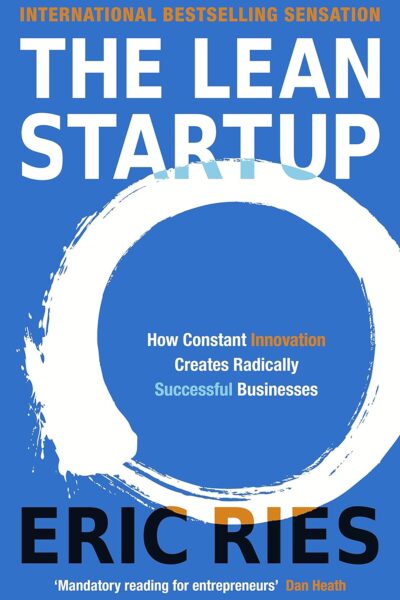
Eric Ries’s groundbreaking book The Lean Startup has fundamentally transformed how entrepreneurs and established companies approach innovation. Published in 2011, this methodology has become the gold standard for launching new ventures and products in an era of unprecedented uncertainty. By combining principles from lean manufacturing, agile development, and customer development, Ries created a framework that helps businesses avoid waste, learn faster, and increase their chances of success.
The Core Problem: Why Most Startups Fail
Traditional business planning assumes we can forecast the future with reasonable accuracy. Companies spend months or years developing detailed business plans, building complete products, and preparing for a grand launch—only to discover that customers don’t want what they’ve built. This approach wastes enormous amounts of time, money, and effort.
Ries experienced this firsthand at his startup IMVU, where the team spent months building features that customers didn’t want. This painful experience led him to question fundamental assumptions about how startups should operate. The result was The Lean Startup methodology, designed to help entrepreneurs test their assumptions quickly and adapt based on what they learn.
What Is a Startup?
Ries defines a startup not by company size or industry, but as “a human institution designed to create a new product or service under conditions of extreme uncertainty.” This definition encompasses both garage entrepreneurs and innovation teams within Fortune 500 companies. The key element is uncertainty—when you don’t know if customers will want what you’re building, you need a different approach than traditional management.
The Build-Measure-Learn Feedback Loop
At the heart of The Lean Startup methodology is the Build-Measure-Learn feedback loop. This cycle represents the fundamental activity of a startup: turning ideas into products, measuring customer response, and learning whether to pivot or persevere.
Most entrepreneurs think the process starts with building, but Ries argues it actually begins with learning. You must first figure out what you need to learn, then determine what you need to measure to get that learning, and only then build the minimum product necessary to enable that measurement.
The goal is to move through this loop as quickly as possible. Speed matters because every iteration brings you closer to a sustainable business model or reveals that your current approach won’t work. The faster you learn, the faster you can adapt—and the less money you waste on ideas that won’t succeed.
Validated Learning: The Unit of Progress
In traditional businesses, progress means executing according to plan. In a startup, following a plan based on untested assumptions is often a recipe for failure. Instead, Ries introduces validated learning as the true measure of progress.
Validated learning is the process of demonstrating empirically that you’ve discovered valuable truths about your present and future business prospects. It’s not anecdotal evidence or vanity metrics—it’s rigorous evidence that customers will actually use your product, pay for it, and that you can build a sustainable business around it.
This shift in perspective is transformative. It means that even a failed experiment that teaches you something important represents progress, while successfully building something nobody wants represents waste—no matter how well executed.
Minimum Viable Product: Test First, Build Later
The Minimum Viable Product, or MVP, is perhaps the most widely known concept from The Lean Startup. An MVP is the version of a new product that allows a team to collect the maximum amount of validated learning about customers with the least effort.
Critically, the MVP isn’t about building a low-quality or incomplete product. It’s about testing your fundamental assumptions with minimal resources before you invest heavily. Sometimes an MVP is an actual product prototype. Other times it might be a landing page, a video demonstration, or even a manual process that simulates what will eventually be automated.
Ries shares numerous examples of creative MVPs. Dropbox created a simple video demonstrating their planned product, which generated massive sign-up interest before they’d built the full solution. Zappos founder Nick Swinmurn tested whether people would buy shoes online by photographing shoes at local stores and posting them online—fulfilling orders manually before building inventory systems.
The point is to learn whether customers actually want what you’re planning to build before you build it. This contradicts the common entrepreneurial instinct to perfect a product in stealth mode before revealing it to the world.
Innovation Accounting: Measuring What Matters
Traditional accounting metrics like revenue and profit don’t help early-stage startups because these numbers are often zero or negligible. Ries introduces innovation accounting as a way to measure progress when you’re still searching for a business model.
Innovation accounting works in three steps. First, establish a baseline by building an MVP to get real data on where you are now. Second, tune the engine by making incremental improvements and seeing if they move metrics toward your ideal. Third, make a pivot-or-persevere decision based on whether your efforts are producing sufficient improvement.
This approach requires identifying actionable metrics rather than vanity metrics. Vanity metrics like total registered users or raw pageviews make you feel good but don’t help you make decisions. Actionable metrics like customer acquisition cost, lifetime value, or conversion rates at each funnel stage tell you whether your business model is working and where to focus improvement efforts.
Pivot or Persevere: The Most Important Decision
A pivot is a structured course correction designed to test a new fundamental hypothesis about the product, strategy, or engine of growth. It’s not just any change—it’s a strategic shift based on validated learning that suggests your current approach won’t achieve your vision.
Ries identifies several types of pivots including zoom-in pivots (where one feature becomes the whole product), customer segment pivots (solving the same problem for different customers), and business architecture pivots (switching between high-margin/low-volume and low-margin/high-volume models).
The challenge is knowing when to pivot. Many entrepreneurs pivot too quickly, abandoning strategies before they’ve truly tested them. Others persevere too long, wasting resources on approaches that validated learning has shown won’t work. Regular pivot-or-persevere meetings, grounded in innovation accounting, help teams make this critical decision based on evidence rather than gut feeling or desperation.
The Three Engines of Growth
Once you’ve found product-market fit, Ries identifies three engines that can drive sustainable growth. The sticky engine focuses on customer retention—keeping customers coming back. The viral engine relies on person-to-person transmission as a natural consequence of product use. The paid engine uses a portion of customer lifetime value to acquire new customers.
Understanding which engine drives your business helps you focus improvement efforts. A company powered by the sticky engine should obsess about reducing churn. A viral business needs to maximize the viral coefficient. A paid-growth company must optimize the relationship between acquisition costs and customer value.
Most successful companies rely primarily on one engine at a time. Trying to optimize all three simultaneously dilutes focus and slows learning.
The Five Whys: Root Cause Analysis
Borrowed from the Toyota Production System, the Five Whys technique helps organizations address the root causes of problems rather than symptoms. When something goes wrong, ask “why” five times to drill down to the systemic issue.
For example: The website went down. Why? The server overloaded. Why? We got more traffic than expected. Why? Our marketing campaign was more successful than anticipated. Why? We didn’t test campaign effectiveness at small scale first. Why? We don’t have a process for validating marketing approaches before full rollout.
This reveals that the real problem isn’t server capacity but the absence of a validated learning process for marketing—a much more important issue to fix.
Ries recommends making proportional investments in prevention based on problem severity. This prevents both under-investment (ignoring recurring problems) and over-investment (creating heavyweight processes after minor issues).
Applying Lean Startup in Established Companies
While the methodology emerged from the startup world, Ries demonstrates how established companies can use these principles to drive innovation. Large organizations often struggle with innovation because they apply management techniques designed for execution to contexts of extreme uncertainty.
The solution is creating entrepreneurial structures within larger organizations—protected spaces where teams can experiment with Lean Startup principles without being crushed by corporate requirements for predictable revenue and detailed forecasting.
This requires senior leadership support, dedicated teams with clear ownership, and the autonomy to run experiments and pivot based on learning. Companies like GE, Intuit, and Dropbox have successfully implemented these principles at scale by creating innovation accounting systems, teaching the methodology broadly, and protecting entrepreneurial teams from inappropriate corporate metrics.
Common Misconceptions About Lean Startup
Several misunderstandings about The Lean Startup methodology are worth addressing. First, lean doesn’t mean cheap. It means eliminating waste—which sometimes requires significant investment in the right experiments.
Second, the MVP isn’t about low quality. It’s about learning efficiently. If your customers expect high quality to properly evaluate your value proposition, your MVP must deliver that quality in the areas that matter for your key assumptions.
Third, validated learning doesn’t mean you ignore vision. The methodology is designed to help you achieve your vision by finding the fastest path there, not to make you endlessly reactive to customer feedback without strategic direction.
Practical Steps to Implement Lean Startup Principles
Identify your leap-of-faith assumptions. What fundamental beliefs must be true for your business to succeed? These typically involve assumptions about customer behavior, willingness to pay, or solution feasibility.
Design experiments to test these assumptions. What’s the minimum you can build to test whether customers actually behave as you assume? This becomes your MVP.
Define actionable metrics. How will you know if your experiment succeeds or fails? Avoid vanity metrics in favor of metrics that inform decisions.
Run the experiment and measure results. Build your MVP, expose it to real customers, and rigorously measure their behavior against your predictions.
Apply validated learning. Based on evidence, decide whether to persevere with your current strategy or pivot to test a new approach.
Repeat faster. With each iteration, look for ways to accelerate the Build-Measure-Learn loop, enabling faster learning and adaptation.
Why The Lean Startup Matters Today
In an age of rapid technological change, shifting customer expectations, and unprecedented market volatility, the ability to learn and adapt quickly has become a critical competitive advantage. The Lean Startup provides a systematic approach to navigating uncertainty that applies far beyond software startups.
Product managers use these principles to prioritize features and validate customer needs. Corporate innovation teams apply the methodology to test new business models. Nonprofits employ validated learning to ensure their programs create real impact. Even government agencies have adopted Lean Startup thinking to improve service delivery.
The methodology’s enduring relevance comes from addressing a fundamental challenge: How do you make good decisions when you can’t predict the future? By emphasizing rapid experimentation, validated learning, and evidence-based iteration, The Lean Startup offers a framework for thriving in uncertainty.
Whether you’re launching a new venture, developing innovative products within an established company, or simply trying to make better decisions under uncertainty, the principles in The Lean Startup provide practical tools for testing ideas before scaling, learning from customers instead of assumptions, and building businesses that solve real problems for real people. In a world where change is the only constant, the ability to learn faster than the competition may be the ultimate sustainable advantage.