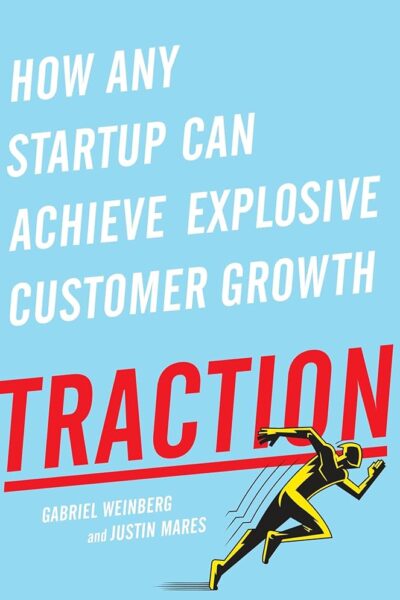
Gabriel Weinberg and Justin Mares wrote Traction to solve a problem that kills more startups than almost anything else: brilliant products that nobody knows about. While founders obsess over building the perfect product, they often treat customer acquisition as an afterthought, something to figure out after the product is ready. This backwards approach explains why 90% of startups fail. Traction flips the script, arguing that traction and product development deserve equal attention from day one, and providing a systematic framework for discovering which customer acquisition channels will actually work for your business.
The Traction Gap: Why Good Products Fail
Most startups die not because they build bad products but because they never figure out how to acquire customers profitably. Founders assume that if they build something great, customers will naturally find it. This almost never happens. The internet is crowded, attention is scarce, and nobody is waiting for your product no matter how innovative it is.
The gap between having a product and having traction has killed countless promising startups. You might have product-market fit in theory, but without a reliable way to get your product in front of customers, that fit remains theoretical. Traction is proof that your unit economics work, that you can acquire customers for less than they’re worth, and that you have a viable business rather than just a nice idea.
Weinberg and Mares argue that the biggest mistake founders make is treating traction as something to worry about later. They pour months or years into product development while giving customer acquisition a few half-hearted attempts. When the product launches and nobody shows up, they’re surprised and unprepared. By then, they’re often out of runway with no clear path to sustainable growth.
The 50% Rule: Balancing Product and Traction
The book’s most provocative claim is that you should spend 50% of your time on traction from the very beginning. Not after you launch. Not once the product is perfect. From day one, you should invest as much energy into figuring out customer acquisition as you do building features.
This seems extreme to most founders, especially technical founders who love building. But the logic is sound. Getting your first customers takes longer than you think. Finding channels that work requires extensive testing. Building relationships with potential partners or press takes months. If you wait until launch to start these processes, you waste precious time and lose momentum.
The 50% rule also provides critical feedback that improves your product. Talking to potential customers, testing messaging, and trying to generate interest reveals what resonates and what doesn’t. This informs product decisions in ways that building in isolation never can. You learn what customers actually care about rather than what you think they should care about.
Implementing the rule requires discipline. You need systems to ensure traction work actually happens rather than getting perpetually deprioritized for product tasks that feel more urgent. Some teams alternate days or weeks between product and traction. Others divide team members. The specific approach matters less than the commitment to treating traction as equally important as product development.
The Bullseye Framework: Finding Your Growth Channel
The heart of Traction is the Bullseye Framework, a systematic process for discovering which of 19 possible traction channels will work for your business. Most founders try a few obvious channels, give up when they don’t work immediately, and conclude that customer acquisition is impossibly hard. The framework provides structure to test channels rigorously and avoid premature abandonment of promising approaches.
The framework has three rings like a target. The outer ring contains all possible channels. The middle ring holds promising channels worth testing. The inner ring, the bullseye, contains the channel you’re focusing on right now to move the needle.
You start by brainstorming how you might use each of the 19 channels. The goal isn’t to develop detailed plans but to generate plausible hypotheses. How could viral marketing work for you? What would a targeting marketing campaign look like? Who would you approach for business development partnerships? This forces you to consider channels you’d otherwise ignore.
Next, you rank channels based on three factors: how likely they are to work, the expected cost, and how many customers they could deliver. You’re looking for channels that seem promising enough to test but different enough from your current approach to teach you something new. The top three to five become your middle ring.
For each middle ring channel, you run cheap tests to validate whether the channel has potential. These aren’t full campaigns but quick experiments to gather data. You might spend $250 on Facebook ads targeting different audiences, reach out to 20 potential partners, or create a simple piece of content to test SEO viability. The goal is evidence, not perfection.
Based on test results, you move the most promising channel to the bullseye and focus on it exclusively until it stops working or you’ve exhausted its potential. This focus is critical. Spreading effort across multiple channels dilutes impact and makes it impossible to learn what actually works. Once you’ve maxed out your bullseye channel or proven it won’t scale, you repeat the framework to find your next channel.
The 19 Traction Channels
Weinberg and Mares identify 19 distinct traction channels that have worked for successful companies. Understanding each channel’s mechanics and when it might work helps you generate better hypotheses during the brainstorming phase.
Viral marketing relies on existing users bringing in new users as a natural consequence of using your product. Dropbox gave extra storage for referrals. PayPal paid both parties when someone sent money to a new user. Viral marketing works when your product improves with more users or when sharing provides clear value to the sharer.
Public relations generates media coverage that drives awareness and customers. It works best for newsworthy stories, contrarian ideas, or remarkable products. PR requires understanding what journalists need and pitching stories rather than products. Early-stage companies can sometimes get outsized coverage by being first to market or having a compelling founder story.
Unconventional PR involves stunts, publicity campaigns, or creative approaches that generate attention without traditional media. This might mean staging events, creating controversies, or doing something so remarkable people can’t help talking about it. It’s higher risk than conventional PR but can deliver massive impact at low cost.
Search engine marketing means buying ads on search engines to appear when people search for relevant terms. It works when customer lifetime value exceeds the cost per click and when search volume exists for valuable keywords. SEM provides fast feedback and precise targeting but can become expensive as you scale.
Social and display ads place your ads on social networks or websites. Facebook, Instagram, LinkedIn, and programmatic display networks offer sophisticated targeting based on demographics, interests, and behavior. These work when you can identify your target audience clearly and when visual or social proof matters for conversions.
Offline ads include television, radio, billboards, and print advertising. While expensive, they can work for products with broad appeal and high lifetime value. Some startups find overlooked offline channels like podcast sponsorships or local newspaper ads that competitors ignore.
Search engine optimization focuses on earning organic search traffic by ranking for relevant keywords. SEO requires creating valuable content, building authority, and technical optimization. It’s slow to start but can deliver compounding returns as you accumulate content and links.
Content marketing uses blogs, videos, podcasts, or other content to attract customers. HubSpot built their business through educational content about inbound marketing. The key is creating content so valuable that your target audience seeks it out, positioning you as an authority and building trust before asking for the sale.
Email marketing builds an email list and nurtures subscribers toward becoming customers. This works across almost every business type but requires offering value before pitching. Newsletters, courses, or exclusive content can build engaged lists that convert reliably.
Engineering as marketing means building free tools or resources that attract your target audience. HubSpot’s Website Grader and Moz’s keyword tools brought in millions of potential customers who later converted to paid products. This works when you can build something valuable that showcases your capabilities.
Targeting blogs involves getting featured on blogs your customers read. You might write guest posts, get product reviews, or sponsor content. This works when influential blogs exist in your niche and when their audiences match your customer profile.
Business development creates partnerships that accelerate growth. Spotify’s integration with Facebook brought millions of users. Airbnb’s Craigslist integration drove early growth. BD works when you can identify partners with access to your target customers and create mutually beneficial arrangements.
Sales means directly reaching out to potential customers and closing them through personal interaction. This works for high-value products where the economics justify significant sales effort. Enterprise software, expensive services, and complex B2B products often require traditional sales.
Affiliate programs pay others to promote your product. Amazon’s affiliate program drives billions in revenue. This works when margins support paying commissions and when potential affiliates have audiences you want to reach.
Existing platforms like app stores, marketplaces, or ecosystems provide built-in distribution. Building on iOS, Android, Shopify, or Salesforce gives you access to their users. Success requires understanding platform dynamics and standing out among competitors.
Trade shows gather your target customers in one place. For B2B companies or niche products, the right trade show can generate a year’s worth of leads in days. The key is choosing shows where decision-makers attend and standing out from hundreds of other exhibitors.
Offline events include hosting meetups, conferences, or gatherings for your community. This builds deep relationships with early users and creates evangelists. It works when community matters to your product and when you can create genuinely valuable experiences.
Speaking engagements position you as an authority while reaching potential customers. Speaking at conferences, meetups, or webinars can drive significant traction if you target the right venues and deliver real value rather than thinly veiled pitches.
Community building creates spaces where your users connect with each other. Forums, Slack groups, subreddits, or in-person communities can become powerful growth engines when members recruit others and when the community provides value independent of your product.
Running Effective Tests
The difference between the Bullseye Framework working and failing usually comes down to test quality. Most founders run terrible tests that teach them nothing. They spend too much or too little, give up too quickly, or test too many variables at once.
Good tests are cheap enough that failure doesn’t hurt but substantial enough to generate meaningful data. Spending $50 on ads won’t tell you if the channel works because the sample size is too small. Spending $50,000 before validating the approach risks too much. The sweet spot for initial tests is usually between $100 and $1,000 depending on your business and channel.
Tests should isolate variables so you know what drives results. If you simultaneously change your ad creative, targeting, and landing page, you won’t know which element mattered. Test one thing at a time or use systematic approaches that track the impact of each variable.
Give tests enough time to work. Some channels like SEO or content marketing take months to show results. Others like SEM provide feedback in days. Understanding each channel’s natural timeline prevents premature conclusions. Set clear success criteria before starting so you evaluate tests objectively rather than finding excuses to justify continuing what isn’t working.
Document everything. What you tested, why you tested it, what results you got, and what you learned. This knowledge compounds over time and prevents you from repeating failed approaches. It also helps you recognize when conditions change enough to revisit previously unsuccessful channels.
Moving Beyond the First Channel
Finding your first traction channel is exhilarating but it’s not the end. Channels eventually saturate. Costs increase as competition grows. Platforms change rules. You need multiple traction channels to build a sustainable business, but adding them at the right time requires judgment.
Too early and you dilute focus, failing to maximize your current channel. Too late and growth stalls when your primary channel hits limits. The right time to add a second channel is usually when you’ve extracted most available value from the first or when growth from that channel begins slowing despite optimization.
When adding channels, run the Bullseye Framework again. Your business has changed since you first found traction. You have more resources, better brand recognition, and proven product-market fit. Channels that didn’t make sense initially might now work brilliantly. Your second or third channel often differs dramatically from your first.
Some channels work better at different stages. Viral marketing requires a product people love enough to share. PR works better with proof points and traction. Enterprise sales requires proven ROI. Your available channels expand as your business matures, making periodic reassessment valuable.
Common Mistakes in Pursuing Traction
The book identifies patterns that prevent startups from finding traction. Recognizing these mistakes helps you avoid them when they’re costing you growth.
Copying competitors without understanding context rarely works. Just because a channel worked for someone else doesn’t mean it will work for you. Your product, audience, and resources differ. Test channels based on your specific situation rather than assuming you should do what successful companies did.
Giving up too soon kills potentially successful channels before they have a chance to work. Most channels require optimization before they deliver strong results. Your first ads will underperform. Your early content won’t rank. Your initial outreach will get ignored. Persistence and iteration separate companies that find traction from those that don’t.
Spreading too thin across multiple channels simultaneously prevents you from learning what works. You can’t optimize five channels at once. Pick one, test it thoroughly, optimize it aggressively, and only then move to the next. Focus creates the depth of effort required for success.
Ignoring math leads to pursuing channels that can never work economically. If your customer lifetime value is $100 and your cost per acquisition through a channel is $150, that channel won’t build a sustainable business. Calculate unit economics early and ruthlessly eliminate channels where the math doesn’t work.
Premature optimization wastes time perfecting channels before validating they work. You don’t need perfect ad creative or landing pages for initial tests. You need to know if the channel has potential. Polish comes after validation, not before.
Case Studies: Traction in Action
The book includes dozens of case studies showing how real companies found traction through different channels. These stories illustrate that there’s no single right answer. Different businesses require different approaches.
DuckDuckGo built their search engine through community engagement and content marketing. They participated in forums, wrote blog posts explaining their privacy focus, and gradually built an audience that cared about search privacy. This grassroots approach worked because their differentiation was ideological rather than technical.
Groupon grew explosively through a combination of email marketing and sales. They built email lists in each city, then sent daily deals that created urgency and shareability. The deals themselves acted as content that people forwarded, creating viral loops. Their sales team closed local merchants, ensuring quality deals that kept subscribers engaged.
Mint used content marketing and PR to reach their target audience. They created a personal finance blog that ranked for valuable keywords and positioned them as experts. They also generated extensive press coverage by being first to market with a beautiful, simple finance aggregation tool. These channels drove millions of users before they spent significantly on paid acquisition.
These cases show that effective traction strategies align with product strengths and target audience behaviors. Mint’s audience read finance blogs and tech news, making content and PR natural fits. Groupon’s model required local sales, making that channel essential regardless of difficulty.
Implementing Traction in Your Startup
Moving from reading about traction to achieving it requires systematic implementation. Start by scheduling regular traction meetings with your team. These shouldn’t be occasional discussions but weekly sessions with the same importance as product meetings.
In these meetings, review ongoing tests, analyze results, and plan new experiments. Hold yourselves accountable to the 50% rule. If you’re not spending roughly half your time on traction, acknowledge it and adjust. This might mean hiring earlier to free up founder time for traction work or explicitly deprioritizing less critical product features.
Create a testing roadmap that maps out which channels you’ll test and when. This prevents traction work from being reactive or haphazard. You should always know what you’re testing now, what you’re testing next, and what success looks like for each test.
Track metrics obsessively. You need to know your customer acquisition cost, lifetime value, conversion rates, and channel-specific performance metrics. Without data, you’re guessing about what works. Set up analytics properly from the start so you can make evidence-based decisions.
Build relationships before you need them. The best PR contacts, potential partners, and community connections take time to develop. Start building these relationships early even if you won’t need them for months. When you’re ready to pursue a channel, existing relationships dramatically increase success rates.
Why Traction Matters More Than Ever
In today’s environment, finding traction has become simultaneously more important and more challenging. Competition for attention has intensified across every channel. Paid acquisition costs keep rising. Organic reach on social platforms continues declining. The companies that win are those with disciplined, systematic approaches to finding and exploiting traction channels.
The good news is that 19 channels provide multiple paths to success. When one channel becomes saturated or expensive, others remain available. The Bullseye Framework gives you a repeatable process for discovering which channels work for your specific business at your specific stage.
Product quality alone has never been less sufficient for success. The internet is full of great products nobody knows about. The companies building the future aren’t necessarily those with the best products but those who combine good products with systematic traction generation. They treat customer acquisition as a core competency rather than an afterthought.
For founders, embracing this reality early dramatically increases your odds of success. Spending 50% of your time on traction from day one feels uncomfortable when all you want to do is build. But it’s precisely this discomfort that prevents most founders from doing it, creating opportunity for those disciplined enough to follow through.
Traction provides the roadmap. It shows you the channels, explains how they work, and gives you a framework for discovering which ones will work for you. What it can’t provide is the discipline to actually do the work. Testing channels systematically requires persistence through failed experiments and uncomfortable conversations. It demands spending time on activities that feel less productive than writing code or designing features.
But the alternative is building something nobody uses. The graveyard of failed startups is full of products that could have succeeded if their founders had figured out traction. Don’t let yours join them. Start treating traction as seriously as product development. Run the Bullseye Framework. Test channels rigorously. Find what works for your business. Then do more of it until it stops working and find the next channel. This systematic approach to traction separates companies that scale from those that stall, and founders who build sustainable businesses from those who build impressive products that nobody ever sees.